The Iowa Environmental Mesonet (IEM) collects environmental data from cooperating members with observing networks. The data are stored and made available on this website.

IEM Daily Feature

Warm End to June

Posted: 26 Jun 2026 05:30 AM, Views: 540
Tags:   mos   nbm  
Our current stretch of very pleasant June temperatures is about to abruptly end with much warmer and more humid weather arriving on Sunday and lasting into the start of July, at least. While the IEM website does not offer much for forecast information, there are a few tool and archive resources regarding Model Output Statistics (MOS). The featured chart combines time lagged ensembles of National Blend of Models (NBM) extended (NBE) temperature output for Des Moines along with computed observations attempting to replicate the time periods that the MOS provides forecasts for. Rewording, the MOS does not produce calendar day high and low temperatures, but max and min values over specified time periods within the UTC timezone. Nothing can be easy, can it? Anyway, these values are typically also the calendar day high and low temperature, but not always! The bars represent the range of forecast values when you combine previous MOS outputs containing a forecast for the given date. The dots are the observed "verification". The last three days of June are shown to have significantly warmer high and low temperatures than what we have enjoyed for practically the entire month!
Rate Feature

Previous Years' Features
Saratoga, IA Webcam:
News Items  

ISU Network Outage [resolved]
Posted: 12 May 11:06 PM

1 April IEM Outage [resolved]
Posted: 2 Apr 10:55 AM

Tracking TAF Amendments
Posted: 13 Feb 10:28 AM

IEM Archival Update
Posted: 24 Sep 11:07 PM

TAF Archive Fixes
Posted: 22 Aug 7:28 AM

Sign up for the Daily Bulletin

Current Website Performance:
Bandwidth: 57.7 MB/s
Total Website: 2,942 req/s
API/Data Services: 126.1 req/s
API Success: 100%

Soil Temperatures

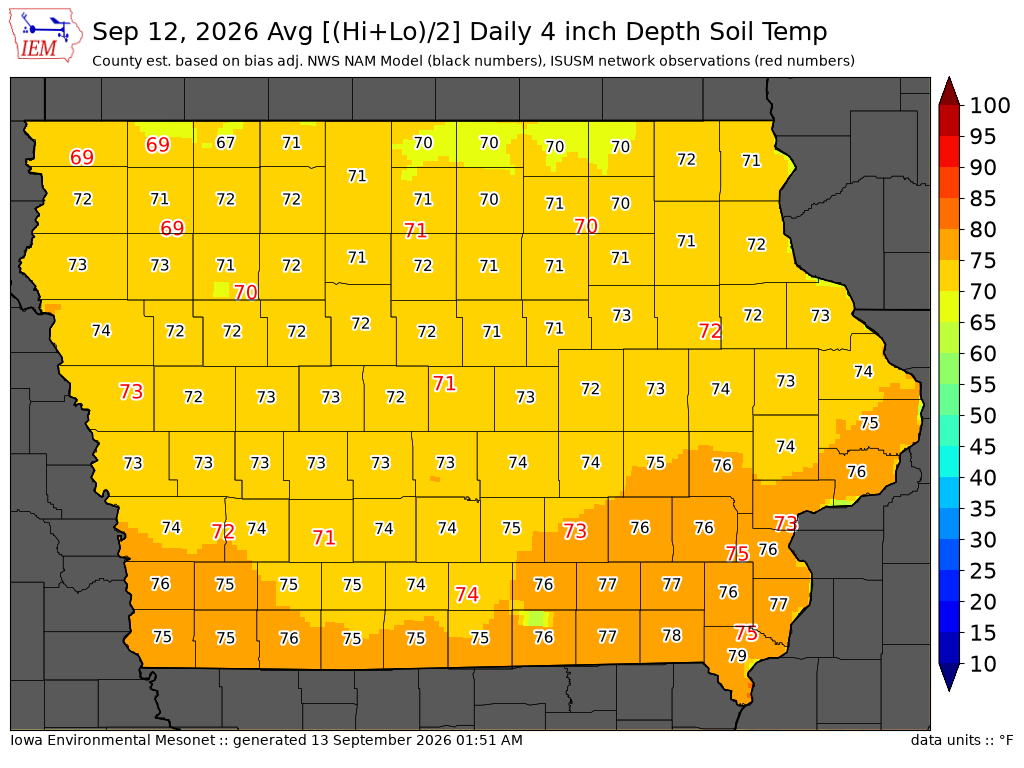
Data from the Iowa State Soil Moisture Network is found on this website and daily soil temperature averages are used to produce the highlighted analysis.
Current Data
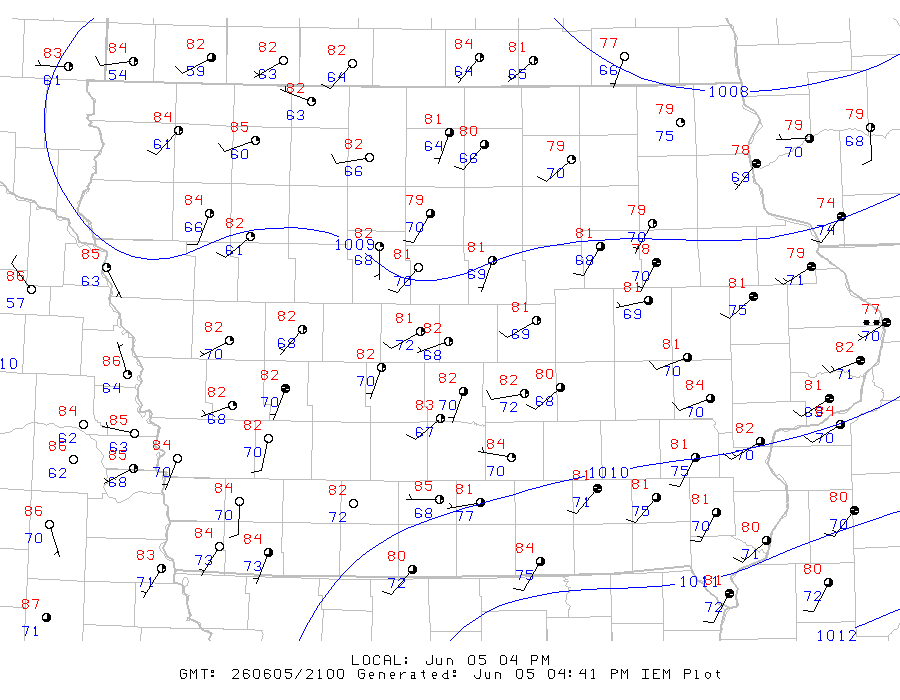
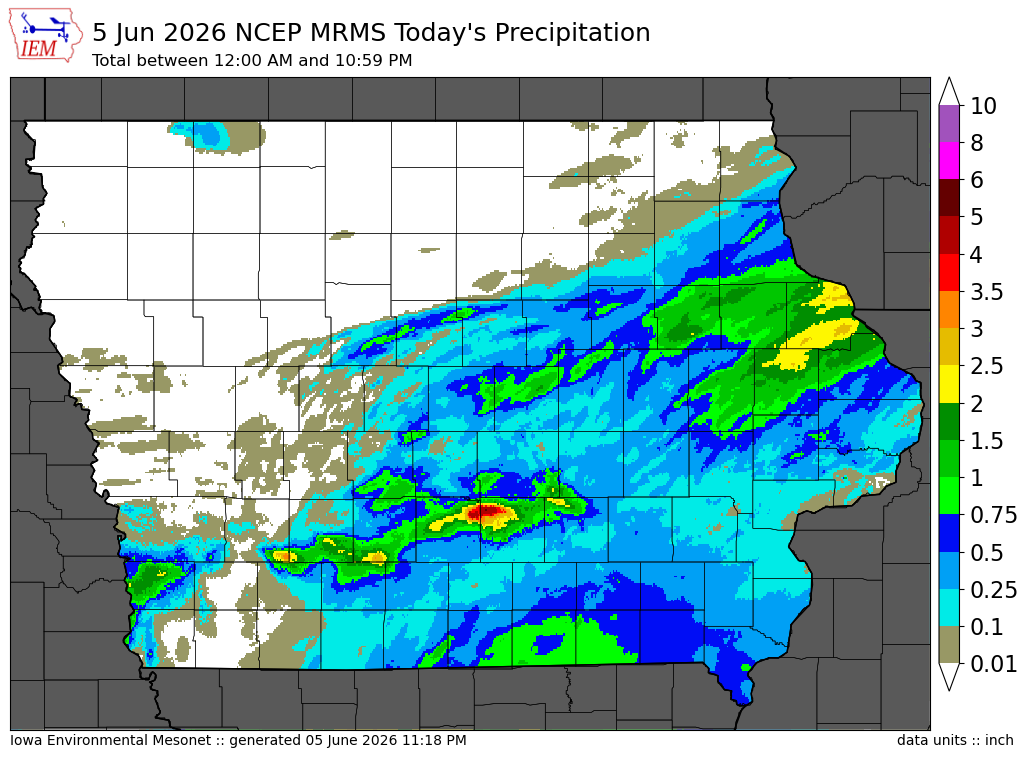
The IEM combines data from participating networks into products like maps shown above and web applications to analyze the data.

More current products »