The Iowa Environmental Mesonet (IEM) collects environmental data from cooperating members with observing networks. The data are stored and made available on this website.
Thursday's Wake Low
Posted: 15 Jun 2026 05:30 AM, Views: 662While the numerous rounds of severe weather last week may be a bit of blur, folks in Ames likely remember the damaging winds from Thursday morning. It was an interesting storm as most of the damage happened after the initial gust front blew through and was associated with a "wake low". The featured chart presents one minute interval observations from the Ames Airport and nicely shows the wake low signature. The top panel shows air and dew point temperature. The second panel combines wind speed, gust, and direction. The bottom panel shows pressure altimeter. A wake low is a transient area of reduced pressure in response to processes happening within organized complexes of storms. These are paired with "meso highs" associated with the gust front and so create strong pressure gradients that generate strong winds. The three panels nicely tell the story of the initial gust front passage (rapid drop in temperature, increase in winds and pressure) followed by a brief lull and subsequent drop in pressure, temperature, and increase in wind speed. The period between about 8 AM and 8:45 AM saw sustained winds near 30-40 MPH with frequent gusts between 50 and 60 MPH. The white dots show the wind direction from the NE during this time, which is likely a strong reason why these winds were damaging. The vast majority of Iowa's strong winds are from the westerly direction, so vegetation and structures "get used to this" situation. When strong winds come from an unique direction, this creates damage possibilities perhaps not possible with strong winds from the west. There is a lot to nerd-out with, but will denote one more interesting item. The minimum plotted temperature reached 59°F just before the wake low departed. Environmental dew points were roughly in the mid 60s, so such a relatively cold temperature was another sign of the strength of the storm complex as thermal and dynamical processes chill the air.
Rate Feature
Previous Years' Features
Williamsburg (I-80), IA Webcam:
Most Popular (List Apps)
ISU Network Outage [resolved]
Posted: 12 May 11:06 PM
1 April IEM Outage [resolved]
Posted: 2 Apr 10:55 AM
Tracking TAF Amendments
Posted: 13 Feb 10:28 AM
IEM Archival Update
Posted: 24 Sep 11:07 PM
TAF Archive Fixes
Posted: 22 Aug 7:28 AM
Sign up for the Daily Bulletin
Current Website Performance:
Bandwidth: 41.6 MB/s
Total Website: 2,602 req/s
API/Data Services: 109.2 req/s
API Success: 100%
Soil Temperatures
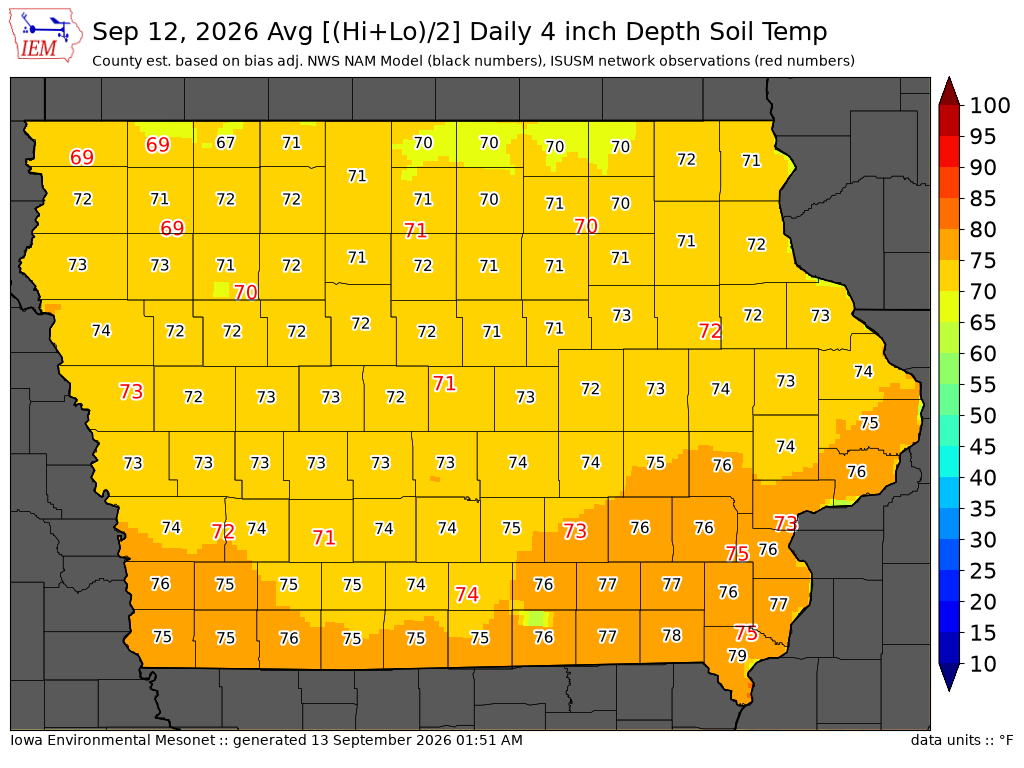
Data from the Iowa State Soil Moisture Network is found on this website and daily soil temperature averages are used to produce the highlighted analysis.